October 2026
Threw Your Back or Neck Out Sneezing? Why the Sneeze Usually Isn't the Real Cause
It happens in a split second. You feel a sneeze coming, you brace, and then you feel a sharp grab in your lower back or neck. Suddenly bending over, turning your head, or even standing up straight feels like a big project.
If this has happened to you, you're not alone, and you're not fragile. In our office, this is one of the most common ways people describe how their pain started. And I want to share why the sneeze is usually not the real problem.
A Story From This Week
Just this week, I saw someone in our office who had reaggravated their back after a sneeze. They were frustrated and a little confused. How could something so small cause so much pain?
I explained that it likely wasn't the sneeze itself. It was more like the figurative straw that broke the camel's back. The sneeze was simply the last little load on a spine that was already under strain.
That's what we often see in practice. The body doesn't usually go from perfectly fine to locked up in one moment. Stress builds quietly over days, weeks, or longer, until one ordinary event tips things over the edge.
Why a Sneeze Can Be the Tipping Point
A sneeze is a fast, forceful event. Your whole body tightens in an instant, and the pressure inside your chest and belly can jump. That pressure can travel into the discs, the soft cushions that sit between the bones of your spine.
When your spine is aligned and moving well, it can usually handle that quick burst. But when the spine is already irritated, tight, or out of balance, that sudden pressure can be enough to set off pain and muscle spasm.
Why It Hits the Low Back and Lower Neck
This kind of flare-up typically shows up in two places:
- The lower back, where the spine carries much of your body's weight
- The lower and middle neck, which supports the weight of your head all day
These are the areas where disc pressure tends to irritate the spine the most. They also do a lot of bending and moving, so they often take the brunt of everyday wear. When something has already been building there, a sneeze can be the moment you finally feel it.
The nerves in these areas also matter. Your spine protects your nervous system, which is the communication network between your brain and the rest of your body. When the spine is stressed or misaligned (what chiropractors call a subluxation), that communication may not flow as smoothly, and muscles can respond by tightening up to protect the area.
What to Do Right After It Happens
First, take a breath. Most of the time, this is your body asking for attention, not a sign of something catastrophic.
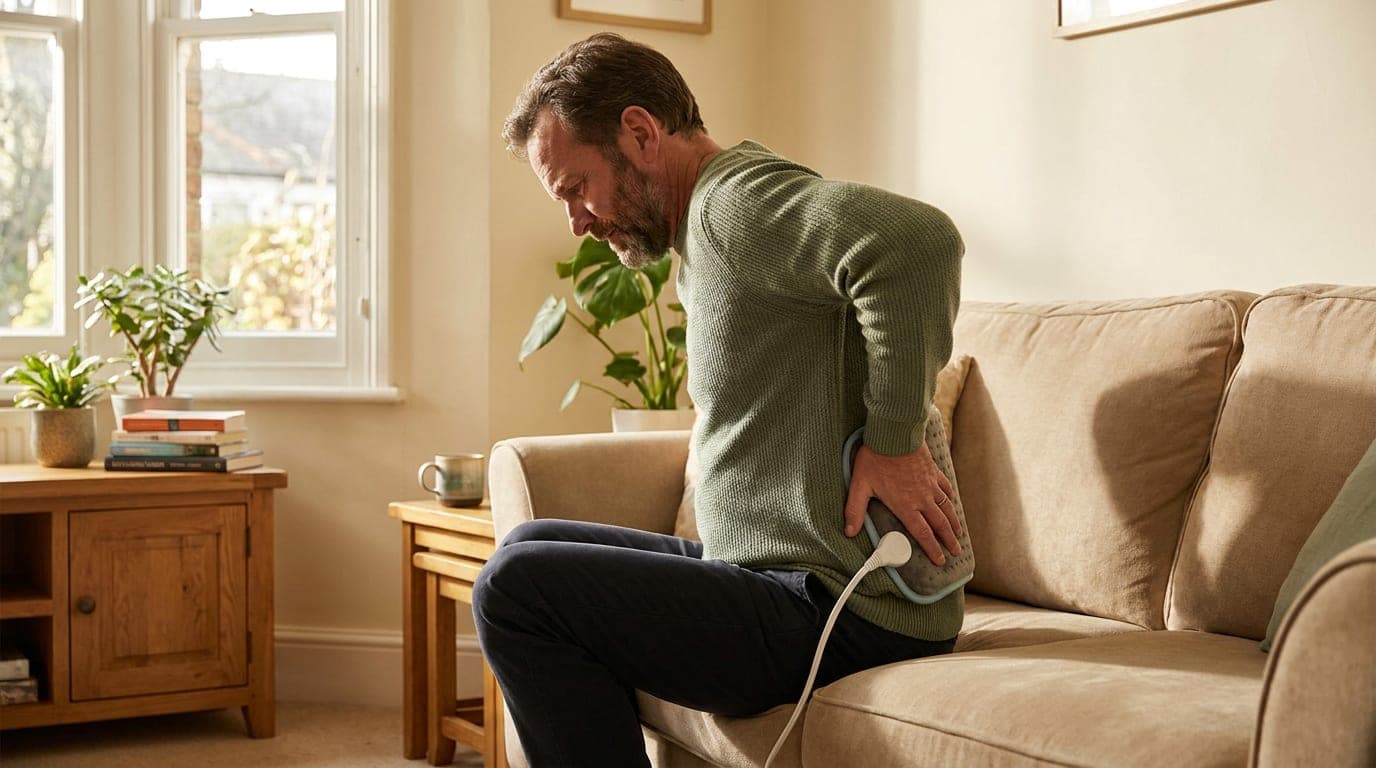
Heat is a great first step. Gentle, comfortable warmth from a heating pad or warm shower can help limit muscle spasming and encourage tight muscles to relax. Keep it at a comfortable temperature and don't fall asleep on a heating pad.
A few other gentle ideas:
- Move slowly and within what feels comfortable, rather than staying completely still all day
- Avoid forcing stretches or trying to crack your own back or neck
- Give yourself permission to rest a bit more than usual
When to see a doctor right away: If your pain comes with numbness or weakness in your arms or legs, changes in bladder or bowel control, fever, or pain after a fall or accident, please get checked by a medical provider promptly.
Look Back at the Last Few Days
Here's the part most people skip. Once the initial pain settles, it's worth asking what was happening before the sneeze. Take a moment to look back at the most recent few days and ask yourself:
- Have I not been sleeping great? Poor sleep gives your body less time to recover.
- Has my stress increased? Stress often shows up as tension in the neck, shoulders, and back. (I wrote more about this in Why Stress Lives in Your Body.)
- Did I do something out of the ordinary in my workouts? A new exercise, heavier weights, or a big jump in activity can leave your spine more vulnerable.
- Have I been sitting more, traveling, or doing the same task over and over? Repeated positions can quietly load the spine, as I explain in The Cost of Doing the Same Thing Every Day.
These questions help you see the bigger picture. The sneeze was the moment you noticed. These are often the things that set the stage.
Preventing the Next One
You can't stop sneezing, but you can help your spine be better prepared for life's little surprises. That means paying attention to sleep, managing stress where you can, easing into new workouts, and taking breaks from long stretches of sitting.
It also means looking at how your spine is actually doing. At Omni Family Chiropractic, we focus on the upper neck, the top two vertebrae called the atlas and axis. This area sits right next to the brain stem and plays a big role in how your nervous system communicates with the rest of your body. When it's out of alignment, we believe the rest of the spine may compensate, and in our experience many people don't notice it until something like a sneeze brings it to their attention.
We use tools like a digital posture scan, thermal scan, and surface EMG, plus X-rays when needed, to see what's going on rather than guess. Our adjustments are gentle and specific, designed to hold so your body can do what it does best. Everyone responds differently, and our goal is to help you understand your own spine so you can make informed choices.
We're Here When You're Ready
If a sneeze, a cough, or bending to tie your shoe has been setting off your neck or back, it may be worth finding out why. We'd be glad to help you get to the root of it.
You can call our office at (804) 214-6236 or book online through our Jane booking page. We're located at 6806 Patterson Ave in Richmond, and Dr. Maxine and I look forward to meeting you.