July 2026
Why Stress Lives in Your Body: The Hidden Connection Between Your Emotions and Your Spine
Stress Isn't Just in Your Head
Have you ever noticed that after a rough week at work, your shoulders creep up toward your ears? Or that during a painful family situation, your neck and back feel tight, achy, and heavy? That's not your imagination. That's your body doing exactly what it was designed to do.
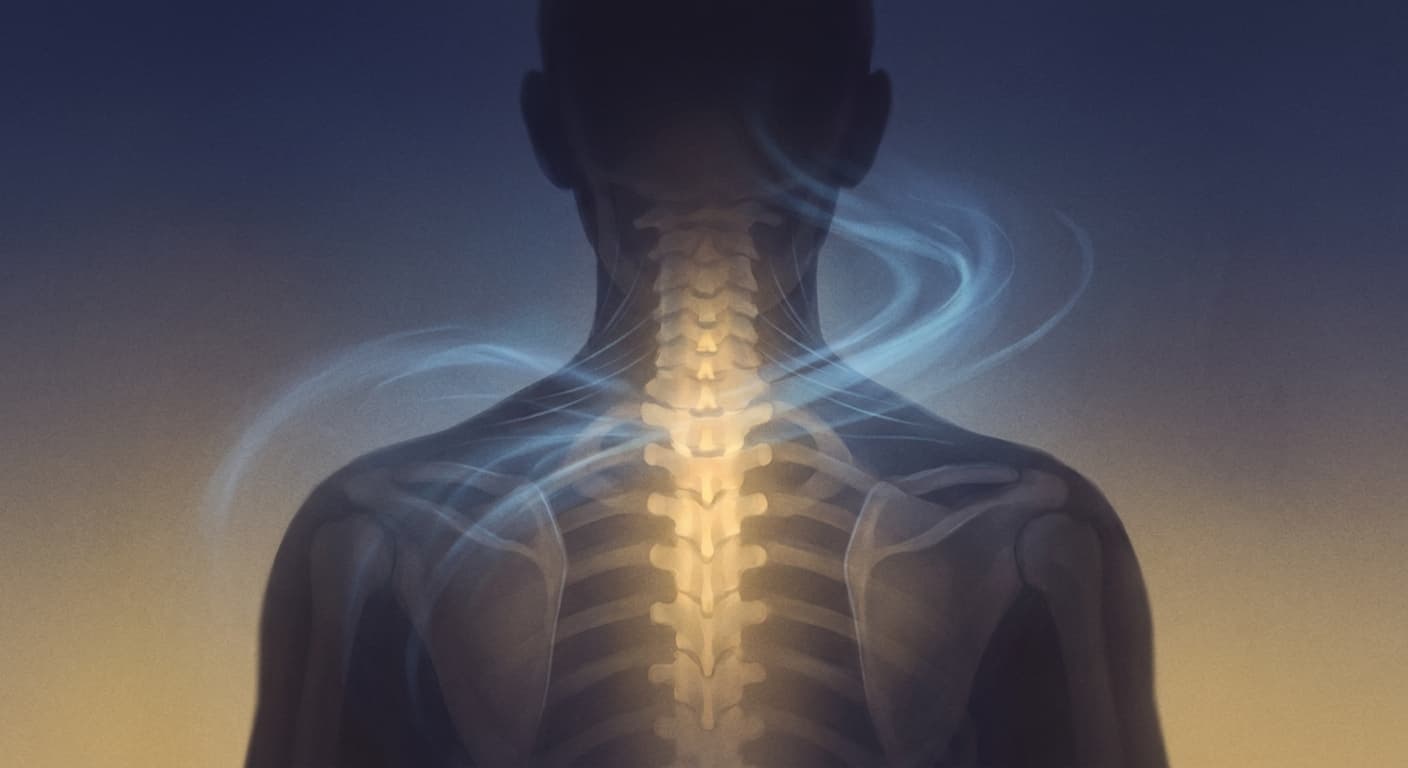
Here's something I remind my patients about all the time: emotional stress shows up physically in the body. Your brain doesn't file "work frustration" and "muscle tension" into separate folders. They're deeply connected — and your spine and nervous system are right in the middle of it all.
How Your Body Responds to Stress
Your nervous system has two main modes:
- "Fight or flight" — the gas pedal that revs you up when you're facing a threat or challenge.
- "Rest and digest" — the brake pedal that helps you calm down, heal, and recover.
When you're under stress — whether it's a demanding boss, a strained relationship, or the loss of someone you love — your body slams down on that gas pedal. Muscles tighten, breathing gets shallow, and your whole system goes into a guarded, protective state.
That's helpful for a short burst. The problem? Modern life keeps that pedal pressed down for weeks, months, even years at a time. Your body was never meant to live in that revved-up state.
One patient came to me with chronic neck pain and headaches. She was convinced she'd "slept wrong." But as we talked, it turned out she'd been caring for her ailing mother for over a year. Her body had been carrying that emotional weight the entire time — literally locking it into her spine.
Where Stress Settles in Your Spine
When your nervous system stays stuck in that stressed, protective state, the muscles along your spine tighten and pull. Over time, this can create what we call a subluxation — a spot where the bones of your spine lose their normal movement and position, putting pressure on the nerves nearby.
Why does this matter? Because those nerves are the communication lines between your brain and every part of your body. When they're irritated or blocked, your body's messages get scrambled. That can show up as:
- Neck and back tension that won't let go
- Headaches
- Poor sleep and low energy
- Digestive troubles
- Feeling "wired but tired" and unable to relax
Emotional stress and physical tension feed off each other. The tighter your body gets, the harder it is for your nervous system to calm down — and the cycle keeps spinning.
Chiropractic Helps Your Body Adapt
Here's the truth: I can't take away your deadlines, your difficult relationships, or the hard seasons of life. Stress is inevitable. But your ability to adapt to that stress is where the real difference is made.
That's the heart of what chiropractic care does. When I adjust your spine, I'm removing that nerve interference and helping your nervous system shift out of "fight or flight" and back toward "rest and digest." I'm helping your body take its foot off the gas pedal.
The result? You handle life's pressures better. Your muscles relax more easily. You sleep deeper, recover faster, and simply feel more like yourself — even when life is throwing everything at you.
"I came in for my back, but what surprised me most was how much calmer I felt afterward. Like my body finally exhaled." — a message I hear more often than you'd expect.
Give Your Body the Ability to Thrive
You can't control every stressor that comes your way — but you can build a body that adapts and bounces back. A healthy, well-adjusted nervous system is your greatest ally when life gets hard.
If you're carrying tension you can't seem to shake, or you feel like stress has taken up permanent residence in your neck and back, I'd love to help. At Omni Family Chiropractic here in Richmond, we focus on getting to the root of the problem — your nervous system — so your whole body can function and feel better.
Call us today to schedule your consultation, and let's help your body handle life the way it was designed to.